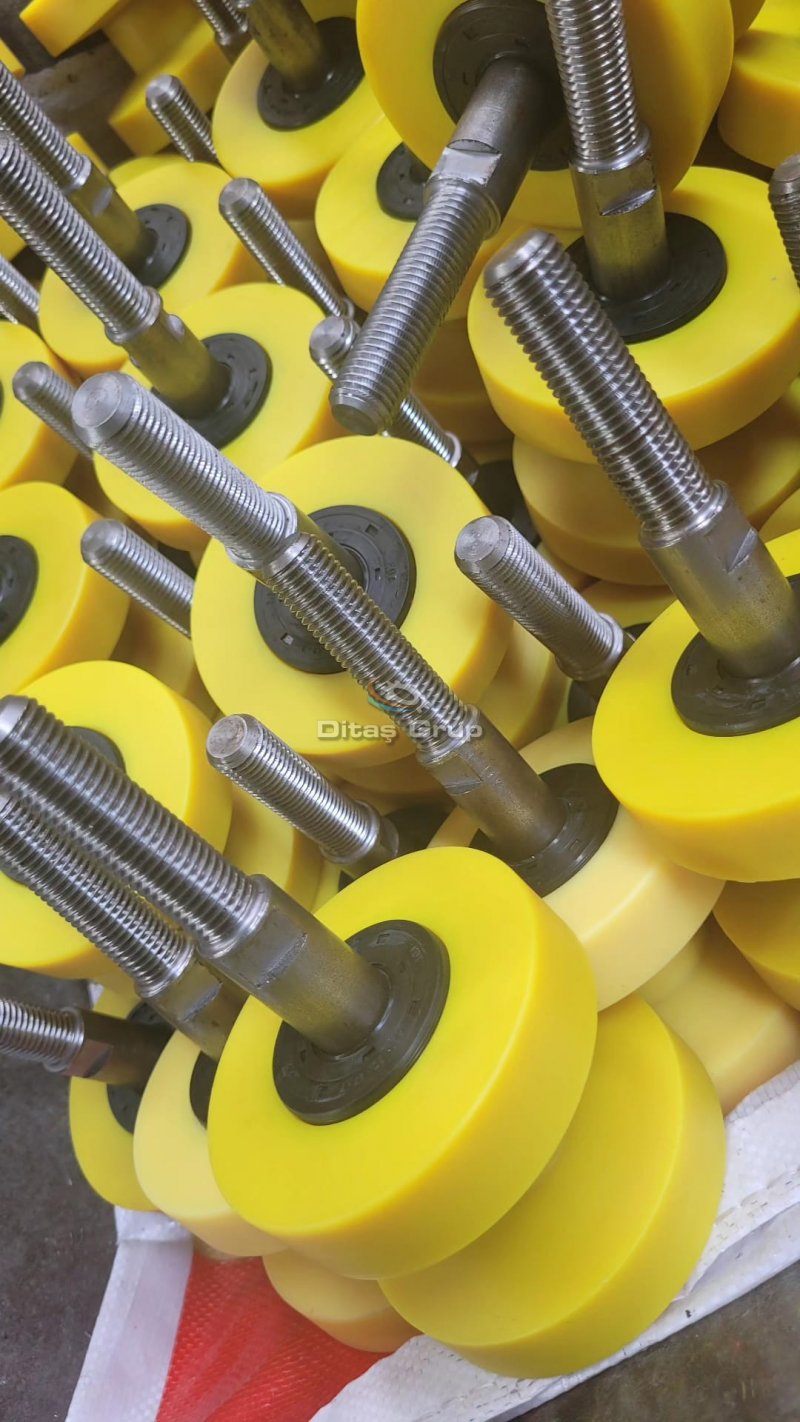
Roller Bearings
Roller bearings are crucial mechanical components widely used in various industries, providing support and facilitating smooth rotational motion for different machinery. These bearings, known for their efficiency and load-carrying capacity, come in various types, each designed to suit specific applications.
1. Types of Roller Bearings:
Cylindrical Roller Bearings: These bearings consist of cylindrical rollers that provide high radial load capacity and moderate thrust loads.
Tapered Roller Bearings: Featuring tapered rollers, these bearings handle both radial and axial loads, commonly used in automotive applications.
Spherical Roller Bearings: Designed to accommodate misalignment, these bearings have barrel-shaped rollers for increased load capacity.
Needle Roller Bearings: Compact and lightweight, these bearings are suitable for applications with limited radial space.
2. Design and Construction:
Inner and Outer Rings: Roller bearings typically consist of inner and outer rings between which the rollers are located. The precision design of these rings ensures proper alignment and load distribution.
Rollers: The shape and arrangement of rollers vary based on the type of bearing. They are responsible for carrying the load and enabling smooth rotation.
Cages: Bearings often include cages to maintain the spacing and alignment of the rollers, preventing friction and wear.
3. Load Capacity and Efficiency:
Radial Load Capacity: Roller bearings excel in handling radial loads, making them ideal for applications where the primary load is perpendicular to the shaft.
Axial Load Capacity: Certain types of roller bearings, such as tapered and thrust bearings, are designed to handle axial loads efficiently.
4. Lubrication and Maintenance:
Lubrication: Proper lubrication is essential for the longevity and performance of roller bearings. Lubricants reduce friction and wear, preventing premature failure.
Seals and Shields: Many roller bearings are equipped with seals or shields to protect against contaminants, extending the bearing's life and reducing the need for maintenance.
5. Application Areas:
Automotive: Roller bearings are widely used in wheel hubs, transmissions, and engines.
Industrial Machinery: They play a critical role in conveyor systems, gearboxes, and various rotating machinery.
Aerospace: High-precision roller bearings are employed in aircraft engines and landing gear systems.
6. Advancements in Technology:
High-Speed Bearings: Advanced materials and manufacturing techniques enable the development of roller bearings capable of handling high-speed applications.
Smart Bearings: Integration of sensor technology for condition monitoring enhances predictive maintenance capabilities.
Conclusion: Roller bearings are fundamental components that contribute to the efficiency and reliability of countless mechanical systems. Their diverse types and applications showcase the adaptability of these precision components in meeting the demands of modern industries.
If you have specific questions or require more detailed information on any aspect of roller bearings, feel free to ask.