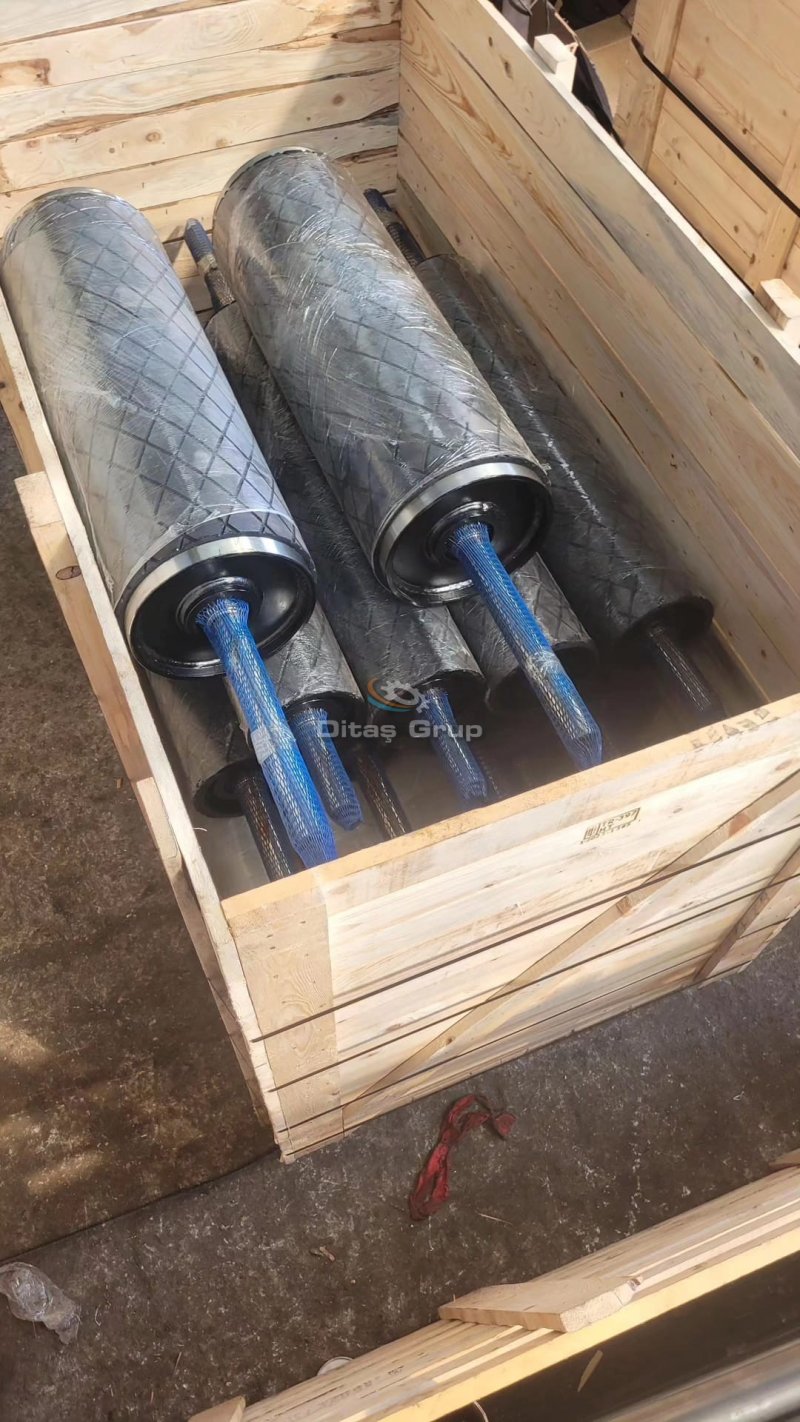
Conveyor Drums:
Conveyor drums, also known as conveyor pulleys or rollers, are critical components in material handling systems, providing the driving force necessary to move belts and facilitate the efficient transportation of goods. These drums come in various configurations and play a key role in the overall performance and reliability of conveyor systems.
1. Types of Conveyor Drums:
Drive Pulleys: Located at the conveyor's head, these pulleys are connected to the motor or power source, providing the driving force to move the belt.
Return Pulleys: Positioned at the opposite end of the conveyor, these pulleys redirect the belt for the return journey.
Snub Pulleys: Designed to increase the wrap around the drive pulley, these pulleys enhance traction and reduce belt slippage.
2. Design and Construction:
Shell Construction: Conveyor drums typically have a cylindrical shell made from durable materials such as steel or composite materials.
Shaft and Bearings: The shaft at the center of the drum is supported by bearings, allowing for smooth rotation. The choice of bearings depends on factors like load capacity and environmental conditions.
Lagging: Lagging, a covering on the drum's surface, can enhance traction and reduce wear on the belt.
3. Drive Systems:
Direct Drive: In this system, the drum is directly connected to the motor, providing a straightforward and efficient power transmission.
Indirect Drive: In this setup, the drum is connected to the motor via a gearbox or chain drive, allowing for speed adjustments and torque control.
4. Lagging and Surface Coatings:
Rubber Lagging: Commonly used for drive pulleys, rubber lagging provides increased traction, reducing slippage and extending the life of both the drum and the belt.
Ceramic Lagging: Suitable for challenging environments, ceramic lagging offers superior wear resistance.
5. Conveyor System Efficiency:
Alignment: Proper alignment of conveyor drums is crucial for the efficient operation of the system, minimizing wear on the belt and components.
Balancing: Balancing the drums reduces vibrations, extending the life of bearings and promoting smooth operation.
6. Application Areas:
Mining and Quarrying: Conveyor drums are widely used in industries that require the transportation of bulk materials, such as mining and quarrying.
Manufacturing: Conveyor systems are integral to manufacturing processes, facilitating the movement of goods along assembly lines.
Distribution and Warehousing: In logistics and distribution centers, conveyor systems with drums streamline the movement of products.
7. Maintenance and Reliability:
Regular Inspection: Routine inspections of conveyor drums, including lagging and bearings, are essential for identifying and addressing potential issues.
Proactive Maintenance: Implementing a proactive maintenance schedule minimizes downtime and ensures the long-term reliability of the conveyor system.
Conclusion: Conveyor drums are essential components in material handling systems, serving as the driving force that enables the seamless movement of goods. Understanding their types, design considerations, and maintenance requirements is crucial for optimizing the efficiency and reliability of conveyor systems.
If you have specific questions or need further details on any aspect of conveyor drums, feel free to ask.